Are Businesses With Fewer Than 15 Employees Required to Have ADA Compliant Websites? Yes.
Where the 15 Employee Myth Comes From
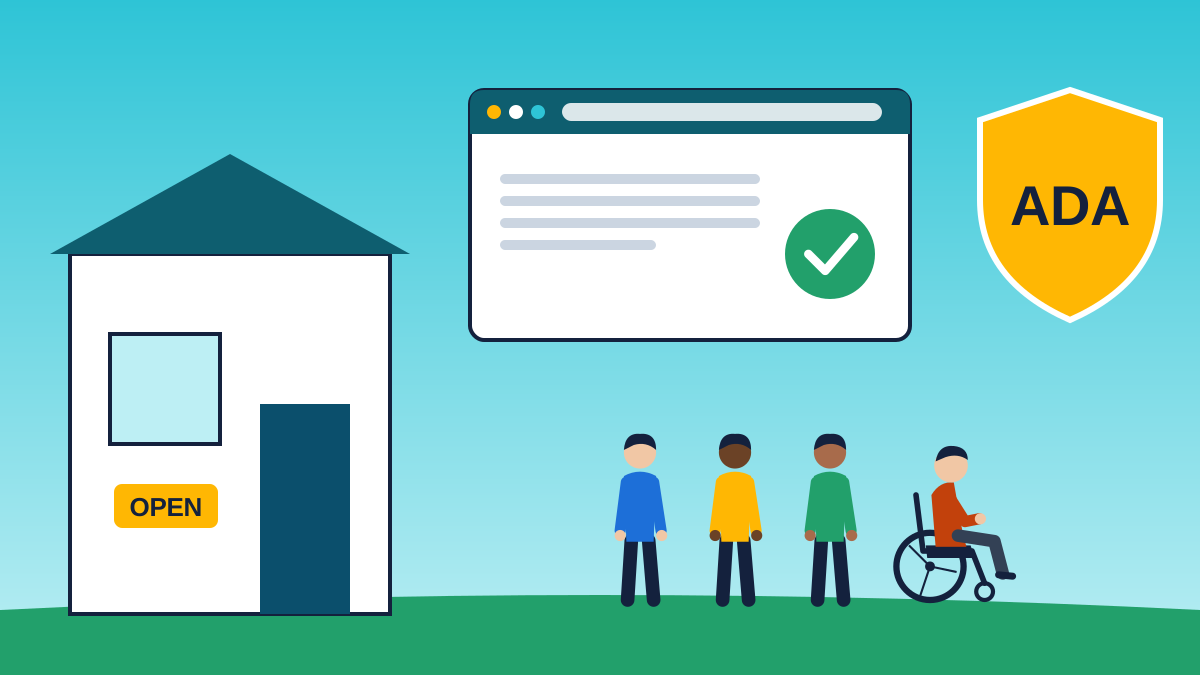
We hear this one a lot: “We only have a handful of employees, so the ADA doesn’t apply to our website.” It’s an easy mix-up, and we understand where it comes from. Unfortunately, it isn’t right.
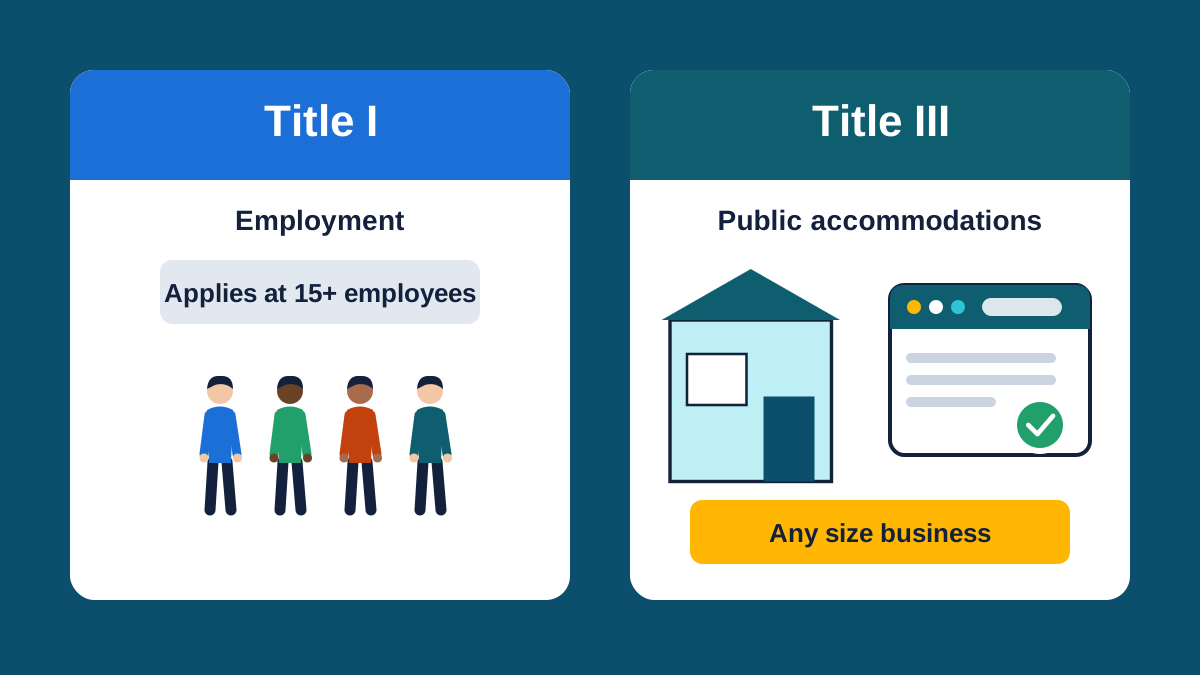
The ADA is divided into sections called titles, and the 15 employee number comes from Title I. Title I is about employment: hiring, job interviews and reasonable accommodations for your staff. If you have fewer than 15 employees, Title I generally doesn’t apply to you. Your website is a different story.
Title III Doesn’t Care How Many People You Employ
Your website falls under Title III, which covers public accommodations. That’s a formal way of saying businesses that serve the public: restaurants, shops, hotels and inns, doctors’ and lawyers’ offices, gyms, banks, tour operators, museums and a long list of others.
Title III has no employee minimum. A two-person bakery and a national chain are both public accommodations. If people can walk in your door or buy from you, the same rules apply.
The Department of Justice has said for years that Title III covers the goods and services a business offers online, and it spelled that out in its 2022 web accessibility guidance for businesses. That guidance is still posted on ADA.gov.
The short version: if your business is open to the public, your website should be accessible, no matter how small your team is.
What Courts Have Said
Because Congress wrote the ADA before websites existed, courts have filled in a lot of the details. Most agree that a business with a physical location needs an accessible website when the site is tied to what happens at that location, like booking a table, checking your hours or buying your products.
Where courts split is on businesses that exist only online. Federal courts in New York have generally said those sites are covered too. Courts in California and some other parts of the country have leaned the other way. That difference is a big reason New York leads the country in these lawsuits.
For a small business in the Adirondacks or anywhere else, the lesson is simple: don’t count on a technicality. Plenty of plaintiffs file in New York, and most small businesses here have a physical location anyway.
Small Businesses Are the Ones Getting Sued
It’s natural to assume these lawsuits go after the big guys. The numbers say otherwise. In 2024, about two thirds of digital accessibility lawsuits were filed against businesses with less than $25 million in annual revenue, and that pattern held through the first half of 2025.
Some law firms file dozens or even hundreds of nearly identical complaints, often starting with a demand letter that asks for a quick settlement. A small business usually can’t afford a long court fight, which is exactly why small businesses get picked.
What About New Federal Rules?
In April 2024, the DOJ issued a rule requiring state and local governments to meet WCAG 2.1 Level AA on their websites and apps. That rule doesn’t apply to private businesses. The DOJ had planned to write a similar rule for businesses, but in October 2025 it withdrew that effort.
Some folks read that as good news. It really isn’t. Without a specific federal rule, businesses are still covered by Title III, and courts and plaintiffs keep pointing to WCAG 2.1 AA as the benchmark. The lawsuits keep coming either way.
WCAG 2.2, the newest version of the guidelines, was approved as an international ISO standard in October 2025. If you’re building or redesigning a site now, aim for WCAG 2.2 AA and you’ll cover the 2.1 requirements along the way.
What You Can Do
- Get an accessibility audit that includes hands-on testing by a person, not just an automated scan.
- Fix the common problems first: color contrast, image descriptions, form labels, headings and keyboard access.
- Skip the one-line overlay widgets. They don’t make a site compliant, and businesses using them still get sued.
- Post an accessibility statement with an easy way for people to reach you if something doesn’t work.
- Keep checking as you add new pages, products and photos.
If you run a small business and aren’t sure where your site stands, drop us a line for a free ADA and WCAG website assessment. When it comes to fixing what we find, our partners at Adirondack Website Design, experts in ADA/WCAG website development, can help.
Sources and Further Reading
- Guidance on Web Accessibility and the ADA, U.S. Department of Justice, ADA.gov
- Small Business and the ADA, ADA National Network
- DOJ shelves ADA rulemaking on digital accessibility, New England Biz Law Update, October 15, 2025
- ADA Web Accessibility Lawsuit Trends: 2024 in Review, Accessibility.Works
- 2025 Midyear Accessibility Lawsuit Report: Key Legal Trends, UsableNet, 2025
- Web Content Accessibility Guidelines (WCAG) 2.2, W3C