
Businesses Using Overlays Like accessiBe and UserWay Keep Getting Sued
One Line of Code Won’t Make Your Website Accessible
You’ve probably seen the ads. Add one line of code and an AI-powered widget will make your website ADA compliant overnight, all for a monthly fee. For a busy business owner, that sounds like a great deal.
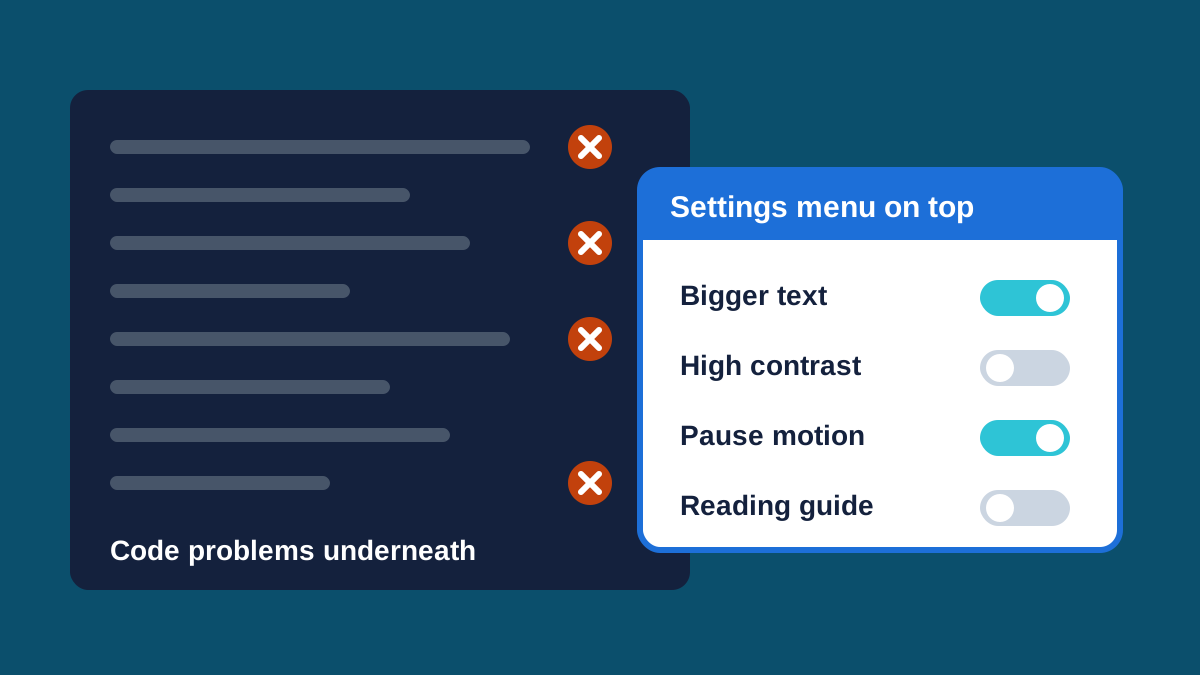
These tools are usually called overlays. They put a small icon on your site that opens a menu of settings, like bigger text or higher contrast, and many claim to repair your site’s code automatically behind the scenes. The trouble is they don’t fix the underlying problems, and for a lot of people with disabilities they make things harder.
The FTC Stepped In
In January 2025, the Federal Trade Commission announced an order against accessiBe, one of the best known overlay companies. The FTC said accessiBe misled customers by claiming its accessWidget product could make any website compliant with WCAG. It also said the company promoted reviews and articles that looked like independent opinions without disclosing its connections to them.
The FTC approved the final order in April 2025. accessiBe had to pay $1 million, and it’s barred from claiming its automated products can make a site WCAG compliant unless it has evidence to back that up.
That’s a big deal. A federal agency looked at the core sales pitch of an overlay product and called it deceptive.
Digital accessibility lawsuits filed in 2024: sites that already had an overlay or widget installed, compared with all other sites. Source: UsableNet data, via Accessibility.Works.
The Lawsuits Keep Coming
Having a widget on your site doesn’t stop a lawsuit. In 2024, about 1,023 digital accessibility lawsuits, roughly a quarter of all of them, were filed against websites that already had an accessibility widget installed.
It kept happening in 2025. UsableNet found lawsuits against sites with widgets filed every single month, peaking at more than 150 in one month. Some complaints now point to the widget itself as one of the barriers.
Why Many People With Disabilities Dislike Overlays
Many blind and low vision users already have screen readers, magnifiers and browser settings tuned exactly the way they like them. An overlay can clash with those tools, change how the page behaves, or add extra controls that get in the way. Automated fixes also get things wrong, like guessing at image descriptions or mislabeling buttons.
The disability community has been very clear about this. More than 1,000 accessibility professionals and advocates have signed the Overlay Fact Sheet, which calls on businesses to fix accessibility problems in their websites instead of relying on overlays.
Haben Girma, the first Deafblind person to graduate from Harvard Law School, explains the problem in a short video on her YouTube channel called “Avoid AccessiBe and other companies claiming quick and easy AI accessibility.” You can find more of her work on her website. Both are well worth a few minutes of your time.
What Actually Works
Real accessibility happens in the website itself: the code, the design and the content. That means:
- An audit by someone who tests with a keyboard and a screen reader, not just an automated scanner.
- Fixing issues in the site’s code and content, right where they live.
- Showing whoever updates your site how to keep new pages and photos accessible.
- Checking in regularly, since every update is a chance for something to break.
It costs more up front than a monthly widget, but it actually helps your visitors and it holds up if someone challenges your site. If you’re a small business, the IRS Disabled Access Credit may help cover part of the cost.
Already have an overlay on your site and wondering what to do next? Get in touch and we’ll talk it through. To replace an overlay with real fixes to your site’s code, our partners at Adirondack Website Design, experts in ADA/WCAG website development, can help.
Sources and Further Reading
- FTC Order Requires Online Marketer to Pay $1 Million for Deceptive Claims that its AI Product Could Make Websites Compliant with Accessibility Guidelines, Federal Trade Commission, January 2025
- FTC Approves Final Order Requiring accessiBe to Pay $1 Million, Federal Trade Commission, April 22, 2025
- ADA Web Accessibility Lawsuit Trends: 2024 in Review, Accessibility.Works
- 2025 Midyear Accessibility Lawsuit Report: Key Legal Trends, UsableNet, 2025
- ADA Web Lawsuit Trends for 2026: What 2025 Filings Reveal, UsableNet, 2026
- Overlay Fact Sheet, overlayfactsheet.com